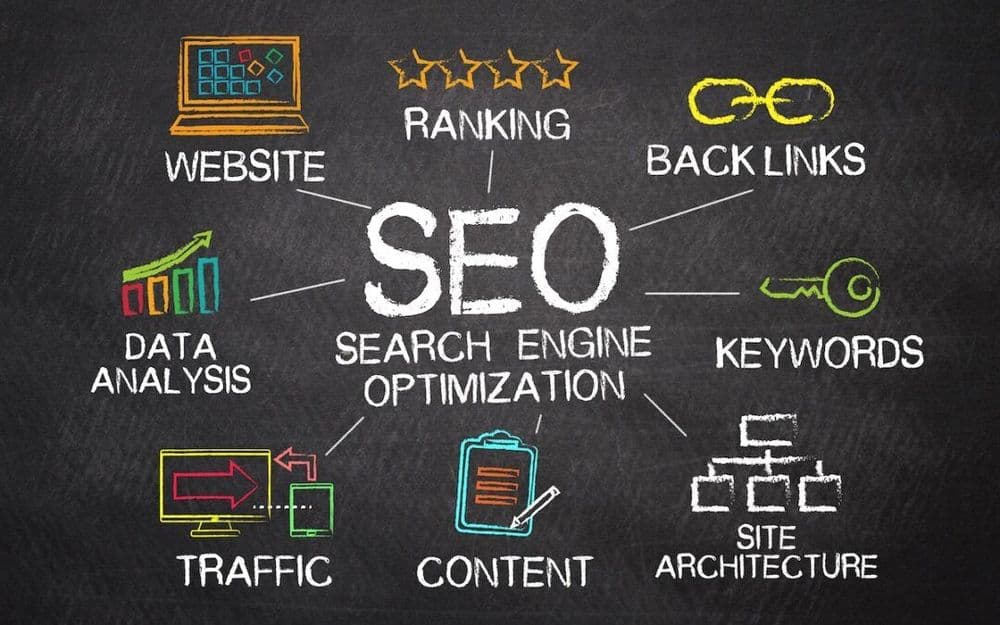
Many new website owners ask whether SEO is necessary from day one. The answer depends on business maturity, acquisition strategy, and expected time to ROI. Search engine optimisation is not a single action but an ongoing process affecting technical structure, content quality, and authority signals. This article explains when SEO should be prioritised and how it interacts with paid advertising — based on verified industry sources.
Is SEO Necessary at Launch? A newly launched website typically has:
- No domain authority
- No backlink profile
- No historical performance data
- Limited crawl history According to Google Search Central, search visibility depends on crawlability, indexing, content quality, and external signals (such as links). These factors accumulate over time. Multiple industry studies (e.g., analyses published by Ahrefs) show that the majority of pages ranking in the top 10 Google results are older than 6–12 months. While age alone is not a ranking factor, authority and backlinks generally require time to build.
Therefore:
- SEO rarely produces immediate results.
- Organic growth typically takes months.
- Early-stage websites often lack the signals required to compete for commercial keywords.
What Should Be Done at Launch? Instead of aggressive keyword targeting, focus on fundamentals:
- Technical accessibility (indexing, Core Web Vitals, structured data where relevant).
- Clear information architecture.
- Content aligned with user intent.
- Conversion-ready landing pages.
These actions are not “advanced SEO” — they are prerequisites for future performance.
Paid Traffic as an Early Acquisition Channel For immediate visibility, platforms such as Google Ads allow traffic acquisition without waiting for organic rankings.
Paid campaigns provide:
-
Immediate impressions
-
Predictable traffic scaling
-
Keyword-level performance data
-
Conversion testing This data can later inform SEO strategy by identifying:
-
High-converting queries
-
User intent patterns
-
Revenue-driving segments However, paid traffic stops when spending stops.
How SEO Supports Advertising Performance
SEO and paid search are often treated separately, but search engines evaluate landing page quality for both. According to documentation from Google Ads, Quality Score is influenced by:
- Expected CTR
- Ad relevance
- Landing page experience Landing page experience includes content relevance, usability, and transparency — areas directly improved through SEO practices.
Practical Impact
- Improved SEO can:
- Increase landing page relevance
- Improve user experience metrics
- Contribute to higher Quality Scores
- Potentially lower cost-per-click (CPC)
Additionally, research discussed in publications such as Search Engine Journal indicates that combined paid + organic presence in SERPs increases total click-through probability due to brand reinforcement effects.
SEO as a Long-Term Asset
Unlike paid campaigns, organic rankings can generate traffic without per-click costs. According to official guidelines from Google Search Central, sustainable rankings depend on:
- Helpful, people-first content
- Demonstrated expertise and trust signals
- Clear site structure
- Natural link acquisition
When executed properly, SEO enables:
- Compounding traffic growth
- Lower blended acquisition costs over time
- Brand authority development
- Increased visibility across informational and transactional queries However, SEO requires maintenance. Algorithm updates and competitive environments mean rankings are not permanent guarantees.
When Should You Actively Invest in SEO?
You should consider scaling SEO efforts when:
- Your website structure is stable.
- Conversion tracking is implemented.
- You have validated product–market fit. Paid campaigns provide keyword performance data.
At this stage, advanced SEO activities become justified:
- Keyword clustering and topic mapping
- Backlink acquisition strategies
- Structured data implementation
- Content expansion based on search demand Without foundational stability, heavy SEO investment may generate traffic that does not convert.
Conclusion
SEO is not always the first growth lever for a new website. In early stages, paid channels may provide faster validation and traffic. However, once operational foundations are in place, SEO becomes a strategic asset that:
- Supports advertising efficiency
- Reduces long-term acquisition costs
- Builds authority
- Generates sustainable organic visibility The decision is not whether SEO is necessary — but when it becomes economically rational in your growth model.